绿茶婊
China becomes major global supplier of green fuel, with production capacity of 8m TOE in 2025_我的网站

A | 这几年大家看明星旅行照,早就不太吃“精修大片”那一套了。
真正能让人停下来多看两眼的,反而是那种带着烟火气的瞬间:蹲在路边吃一口热乎的,手里拎着打包袋,衣服也不刻意,像是真的在过日子。
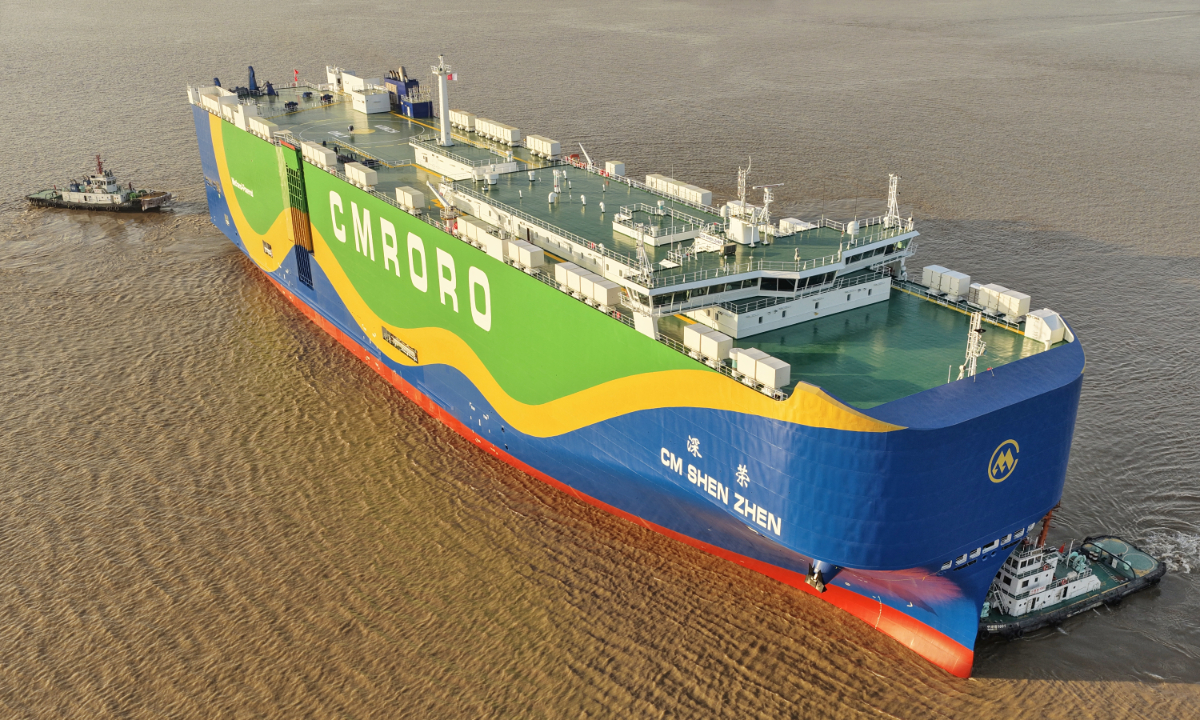
China's first independently developed ultra-large methanol dual-fuel roll-on/roll-off (ro-ro) ship begins its maiden voyage in Nantong, East China's Jiangsu Province, on December 8, 2025. With a capacity equivalent to 9,300 cars and 78,400 square meters of deck space, the ship will carry new-energy vehicles to Europe. Photo: VCGChina's green fuel industry has made phased progress, with production capacity steadily increasing. As of the end of 2025, the country had green fuel production capacity of about 8 million tons of oil equivalent (TOE) per year, according to a report released by China's National Energy Administration (NEA) on Wednesday.
The output of green methanol reached 380,000 tons, green ammonia stood at 700,000 tons, and sustainable aviation fuel hit 1.7 million tons, making China a major global supplier, the report showed.
The NEA published the China Green Fuel Development Report (2026) on its website on Wednesday. Downstream application scenarios for green fuels in China continue to expand, with coverage extending from land transportation to the shipping, aviation and industrial sectors, the report showed.
China's green methanol production capacity accounted for 60.3 percent of the world's total in 2025, according to the report. The ratio for green ammonia was 79.5 percent.
Green fuels, represented by green methanol, green ammonia, and sustainable aviation fuel, are fuels with low carbon emissions throughout their entire life cycles and in compliance with environmental protection requirements.
In recent years, global climate governance constraints have tightened, and the global energy mix has accelerated its transition toward clean and low-carbon sources. International organizations such as the International Maritime Organization and the International Civil Aviation Organization, as well as countries and regions including the US, the EU, and Brazil, have introduced policies to promote carbon reduction in key transportation sectors.
Analysts said that China's development of green fuels not only supports deep decarbonization in key industries and addresses the bottleneck of large-scale renewable energy absorption, but also helps cultivate new drivers of economic growth. That's very significant in supporting global climate action and promoting a comprehensive green transformation of the Chinese economy and society, they said.
Although China has taken a leading position globally in green fuel production and equipment R&D, key technological equipment still requires further breakthroughs, Li Zhijian, vice president of the China National Petroleum & Chemical Planning Institute, said in a post on the NEA's website.
In particular, there remains considerable room for improvement in areas such as biomass gasification efficiency and the performance of high-efficiency synthesis catalysts - areas that urgently need focused research efforts, Li noted.
According to projections from domestic and international institutions, global green fuel demand is expected to reach about 10 million TOE by 2030 and exceed 100 million TOE by 2050, indicating vast room for industrial growth.
China, rich in renewable resources such as wind, solar, and biomass, provides a solid foundation for large-scale development of the green fuel industry, the NEA said.
China could achieve green electricity from a total installed capacity of 3.6 billion kilowatts for wind and solar power, with an annual available volume of organic waste of some 617 million tons by 2035. If reasonably used for green fuel production, this could support an industrial scale of about 10 million TOE, Li said, citing an industry estimate.
Global Times
。杨幂这组贵阳旅行照,火得就挺直接。不是因为摆得多高级,恰恰是因为太松弛了,松弛到让很多人一下子想起,自己上一次认真出去走走,好像还是很久以前的事。
她这次去贵阳,不是只停在景点门口拍照。

B |
照片里能看出,她是真的在逛老巷、尝小吃、钻进老馆子吃酸汤鱼,甚至还被拍到排队买糯米饭。那种感觉很真实,不像“来过”,更像“住进了这座城市一小会儿”。这种真实感,往往比十张精修图更容易让人心动。因为大家平时太累了,工作累,生活也累,看到别人不用端着地旅行,会很自然地想:原来出去走走,也可以这么轻。 贵阳这波热度,起得一点都不意外。 #杨幂晒贵阳旅行照#把贵阳旅游搜索量直接带涨了300%,阳明祠、青岩古镇这些地方热度也跟着上来了。更明显的是,贵阳文旅局很快就顺势推出了“杨幂同款Citywalk路线”,把她打卡过的丝娃娃老店、酸汤鱼馆这些地方都串了起来。这个思路挺实在,不是光喊口号,而是把明星的停留,直接变成游客能照着走的一条线。 有意思的是,她这次去的地方不只是大家熟悉的热门点。 除了阳明祠、万峰林,她还去了花溪夜郎谷、肇兴侗寨这些更有地方味道的地方。据本地导游说,她还挺喜欢错峰出行,清晨或者傍晚去走,避开人挤人的时候。这个细节很关键。因为很多人不是不想旅行,是一想到景点人山人海、拍照排队、吃饭排队,就先累了。错峰这件事,看着小,其实特别能影响体验。 我个人感觉,现在大家喜欢看的,已经不只是“明星去了哪里”,而是“她怎么去的”。 杨幂这组照片最打动人的地方,就是那些不太完美的边角:沾着辣椒的指尖、皱了的纸巾、路边随手一坐的状态。

C | 它没有把旅行拍成广告,也没有把城市拍成样板间。

D | 反而让贵阳的老街、夜市、食物、石板路,都变得更像生活本身。

E | 这种传播,比单纯打景点牌更有后劲。 因为它不是在卖“看点”,而是在卖一种生活方式。

F | 年轻人为什么会去模仿“贵阳松弛感穿搭”,为什么会去搜同款路线,说到底,还是因为大家都想在紧绷的日子里,找到一点能喘口气的地方。贵阳这次刚好接住了这种情绪。 更值得说的是,照片里那条青石板路,其实是电台街。 这是一条贵阳仅存的明清老街,因为照片曝光后,后面还启动了保护性修缮。这个变化挺让人感慨的。很多时候,一座城市真正被看见,不一定是因为它有多“新”,反而是因为它那些老的、安静的、原本不太起眼的地方,被人认真看了一眼。 所以这次事件最有价值的,不只是热搜和订单。 它更像是在提醒大家:现在的文旅传播,早就不是单靠景点海报就能打动人了。真实、松弛、生活化,才更容易让人愿意去。

G | 贵阳借着这波热度,把“避暑之都”和“烟火气”两个标签一起立住了;而杨幂这组旅行照,也把明星旅行的审美,往更自然的方向往前推了一步。 说到底,大家真正想看的,从来不是一座城市被包装得多漂亮。 而是它能不能让人觉得,来了以后,心能慢一点,人能松一点。 这大概就是贵阳这次最成功的地方。返回,查看更多。
Current article:http://jkcbsd.gamajionghuanmuniuzhuanguchu.cyou/yfs0y/q5gqwql.html
Published on:04:39:18


