
梅花三弄
江苏无锡市中级人民法院原党组成员、审判委员会委员刘勇被查_我的网站

A |
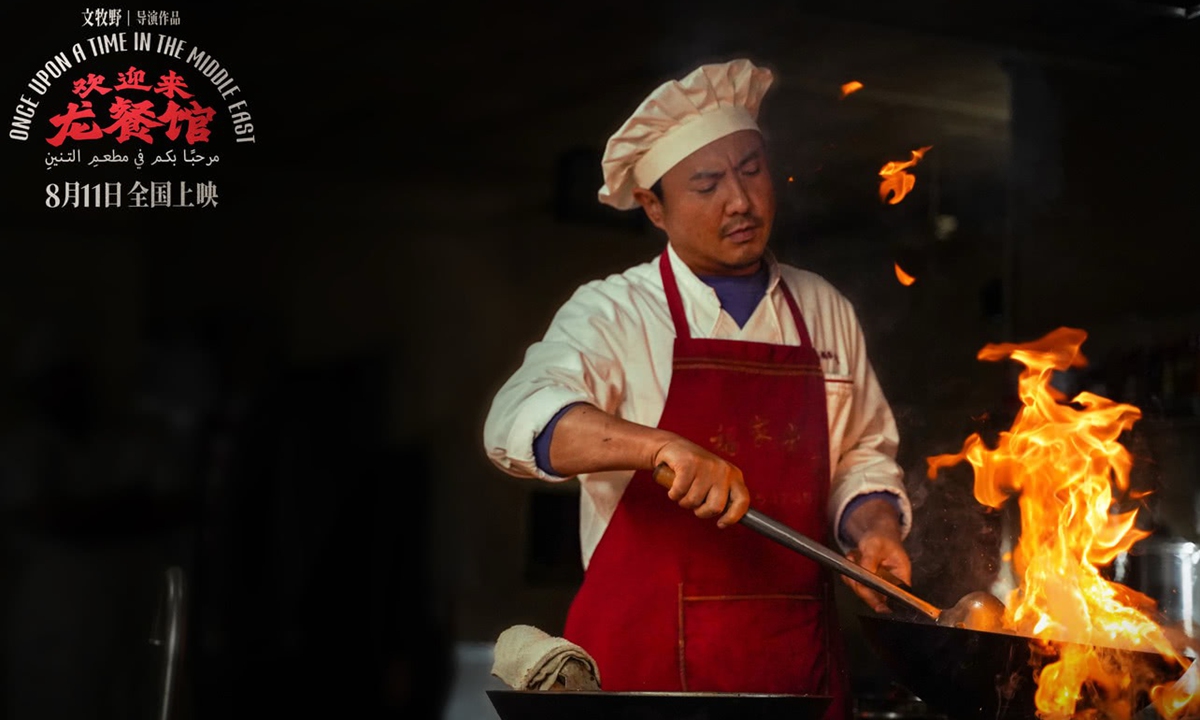
It centers on an ordinary Chinese chef caught in the crossfire of war. Shen Teng stars as Xu Fu, a cook who travels to the fictional Middle Eastern capital of Bahata to repay family debts. There he joins forces with restaurant manager Ma Junsheng (actor Jiang Qiming) to run a Chinese eatery. When conflict erupts, the self-preserving every-man endures personal losses and gradually comes to protect local children.
Produced by Ning Hao, the film continues Wen's signature focus on "little people," this time placing them far beyond China's borders.
In an interview with the Global Times, Wen talked about the project's connection to news reports of Chinese migrants who open restaurants overseas and forge quiet connections through food.
"Many Chinese people go abroad simply to make a living," he told the Global Times. "They open restaurants, use food to break down regional barriers, and form deep bonds with locals."
The production team conducted extensive research and location scouting in the Middle East to capture everyday details. Elements such as free-running single-humped camels required overseas shoots; the resulting images of open space after confinement, Wen noted, carry a simple sense of hope.
Food functions as the film's central motif.
"Food more often stands for happiness and peace," Wen explained. "Even in a war-torn environment, people still cannot do without three meals a day. That sounds basic, but after all the big things in life, what people care about most are the simplest things - eating a proper meal and taking care of family."
A specialized food unit developed the dishes, and Shen trained extensively so that most of the wok-tossing sequences were performed by the actor himself, Wen said.
The film deliberately intercuts kitchen routines with combat sequences.
"Three meals a day represent our longing for peaceful life, while war is the extreme act that destroys peaceful life on a large scale," Wen said. "When they collide, each becomes clearer: Food feels more ordered and full of happiness; war feels more chaotic and dark."
He hopes the juxtaposition helps audiences recognize how hard-won ordinary peace really is.
Xu Fu's decision to shelter orphans never relies on lofty rhetoric, only a meal and a roof. Wen described this approach as rooted in a human-centered outlook rather than classic Western hero narratives.
"We place more weight on humanism and the value of a person's existence. Our culture is about living well, studying well, eating well, and looking after children. No matter how large the events, three meals a day remain unavoidable. Food itself has warmth and can give people real strength when they are in a difficult situation," Wen said.
The director noted that he wants viewers to leave with the plainest conviction: live properly, eat properly, and cherish the peace that exists in the present.
On balancing personal expression with commercial reach, Wen kept his principle simple: "Make the film well and tell the story well. I try to put what I want to express into foreshadowing and details without hurting the viewing experience. If audiences notice those details, I will be glad. If they do not, it does not affect the normal narrative."
From Dying to Survive and Miracle: Stupid Kid to the new film, Wen's view of human complexity has remained consistent. "People have many different sides. They face different circumstances and make different choices."
The through-line, he added, is the same plain belief: "Being able to enjoy a proper meal is the greatest happiness."
Early audience response has been overwhelmingly positive. Advanced screenings delivered scores of 9.7-9.8 on major Chinese platforms including ticketing platform Maoyan.
Many entered expecting a light Shen Teng comedy and left in tears, describing the experience as "laughing then crying." Shen's restrained performance has drawn particular praise, with some calling it the strongest of his career. Jiang's supporting work has also been widely noted.
Moviegoers have frequently highlighted the film's refusal to deliver speeches. Its focus on daily meals and small acts of care lands more powerfully than any slogan.
On the depiction of the conflict, audiences observe that the movie offers a perspective that "flips the Hollywood script" by casting the US as the invader, while refusing to portray US soldiers as pure villains. Instead they appear as ordinary young men: loose in discipline and marked by the alienation of war.
Both Chinese and overseas viewers have singled out this measured approach as part of the film's distinctive Chinese viewpoint: It sidesteps both Western hero narratives and simple demonization. Some international comments note that by staying with ordinary lives rather than choosing geopolitical sides, the story offers a different lens on conflict.
One widely circulated comment from a popular Chinese self-media account on WeChat captured the film's ambition: "You can think of this film as a blend of Casablanca, Schindler's List, and The Shawshank Redemption, yet at its core lies the same grounded human compassion found in Dying to Survive. This is a highly successful attempt by Chinese filmmakers to surpass Hollywood. It is the first Chinese film that truly possesses a global vision and a professional sense of international storytelling. It is also a gift of warmth and goodwill from the Chinese people to a world still torn by war and cruelty."
。
无锡市中级人民法院原党组成员、审判委员会委员刘勇涉嫌严重违纪违法,目前正在接受无锡市纪委监委纪律审查和监察调查。
。
B | 刘勇简历 刘勇,男,汉族,1960年7月出生,江苏无锡人,在职大学学历,1976年7月参加工作,1983年9月加入中国共产党。1976年7月,无锡市汽油机厂职工;1985年9月起,历任无锡市中级人民法院工作人员、书记员、助理审判员、审判员、执行庭副庭长;1998年5月,任无锡市崇安区人民法院副院长、审判委员会委员;2003年3月,任无锡市惠山区人民法院党组书记、代理院长、审判委员会委员(副处职);2004年2月,任无锡市惠山区人民法院党组书记、院长、审判委员会委员;2010年12月,任宜兴市人民法院党委书记;2011年1月,任宜兴市人民法院党委书记、院长、审判委员会委员;2016年11月,任无锡市中级人民法院党组成员;2016年12月,任无锡市中级人民法院党组成员、审判委员会委员;2020年8月退休。

C | (无锡市纪委监委)

D |
Current article:http://jkcbsd.gamajionghuanmuniuzhuanguchu.cyou/news/20260826_677747.html
Published on:13:39:39
相关新闻
- 3名工作人员曾接受韩国性贿赂?中国足协回应
- 寄情建昌山水 拥抱“诗和远方”——县文旅局局长马敬极畅谈《建昌县全域旅游发展总体规划》
- 张晓龙:维新的比赛和预期还有很大的差距。
- US pressing for safe passage of civilians out of Gaza, including Americans
- 「単独では生き残れません」 日産国内15%減、ホンダ中国24%減――欧州BYDに追い抜かれ、両社が選ぶ生き残りの道とは
- 爱尔兰一群未成年人靠犯罪当网红 半夜偷车狂飙出事故全灭
- mRNA抗癌疫苗落地后 还有哪些创新药赛道有望迎来“GPT时刻”?
- 二战杀10万波兰人,如今却被捧为英雄,泽连斯基做法激怒华沙,云景史记,原创 二战杀10万波兰人,如今却被捧为英雄,泽连斯基做法激怒华沙
- पापा... मैं कंपनी के हेड से तंग आ गया हूं, युवक ने सुसाइड नोट लिखकर दी जान; जवान बेटे की मौत से मचा कोहराम
- 热门赛道丨告别“修路”式AI开发:AI Infra建起大模型时代的“高铁网”
最后更新
- 2026名人堂名单出炉!小斯成功入选,彻底改写门槛认知
- अटेंशन प्लीज! झारखंड के इन छोटे स्टेशनों पर भी रुका करेंगी एक्सप्रेस ट्रेनें, पांच साल बाद हुआ एलान; चेक करें लिस्ट
- 赏艺润心田 聚力共成长
- 山西奔驰女司机碾压孩子后续:遭奔驰女司机碾压男童被下病危通知
- ドラマの「弟役」でブレイクした俳優は? 記憶に残る名演(3)癒し系の“弟キャラ”を好演した元・コワモテ俳優
- US says Iranian drones breach sanctions
- 小米 REDMI 17C 5G 手机海外发布:天玑 6300 芯片,279 新加坡元
- 阿勒代斯:我认为阿森纳能够卫冕英超 曼城正在经历重建
- CDN加速配置教程:Cloudflare和国内CDN对比
- 西南医科大学通报:已对言语失当辅导员严肃批评教育
热门新闻
- Param Sundari First Review: फुल पैसा वसूल या फिजूल! आ गया सिद्धार्थ और जाह्नवी की परम सुंदरी का पहला रिव्यू
- 美官员:美军开展秘密行动在霍尔木兹海峡打通运油航道,霖霖原声,原创 美官员:美军开展秘密行动在霍尔木兹海峡打通运油航道
- 红楼人生:用“自黑”去化解完美困局
- China's wild Asian elephant population grows amid conservation efforts
- 长江电力:中国三峡集团累计增持公司股份约1.62亿股
- 香港麦当劳:多轮检测显示虾饼样本未验出硝基呋喃,符合食品安全要求
- 鹿城畅游·消防随行 第8期 | 走进露营户外等场所开展消防宣传活动
- Farah Khan Praises Aryan Khan, Reveals Shah Rukh Khan Is Training Suhana Khan in Action for King
- 企业差旅及团体出行怎么挑选机票代理
- 经纬度:人工智能与超大城市如何双向奔赴